Body Dragging: It’s More Important Than Your First Water Start
You can ride, but can you get your board back?
There’s one sentence we hear all the time at our kite school: “I can already ride.” And that’s great. But then our next question is usually: “Can you get your board back after a crash?”
And that’s where the real problem often starts.
Why Flat-Water Spots Can Hide the Problem
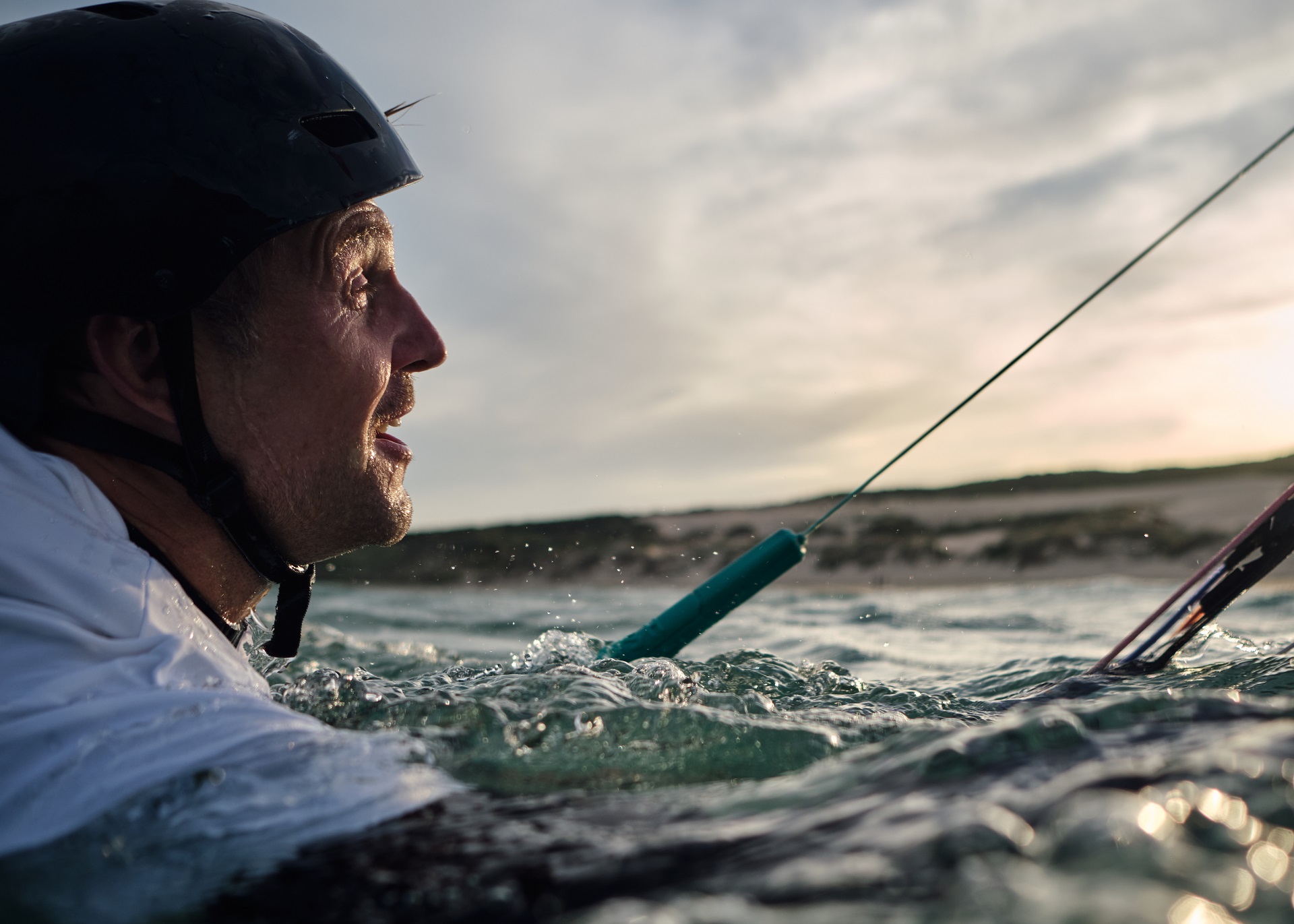
Many kitesurfers learn at amazing flat-water spots like Hel in Poland, Egypt, Dakhla, or other lagoons. The water is shallow, the board usually doesn’t drift very far away, and if you lose it, you can often just walk back and pick it up.
That works perfectly well in those conditions. Until one day you arrive in Tarifa or another open-ocean spot. Suddenly you realize that you can ride, but you can’t get your board back after a fall.
And that’s something we see again and again. It’s not necessarily the student’s fault. At many flat-water spots, body dragging simply isn’t as critical because recovering your board is much easier. As a result, this skill sometimes receives less attention or isn’t trained as intensively as it is at open-water locations.
The moment you arrive at a place like Tarifa, you quickly understand why body dragging matters so much.
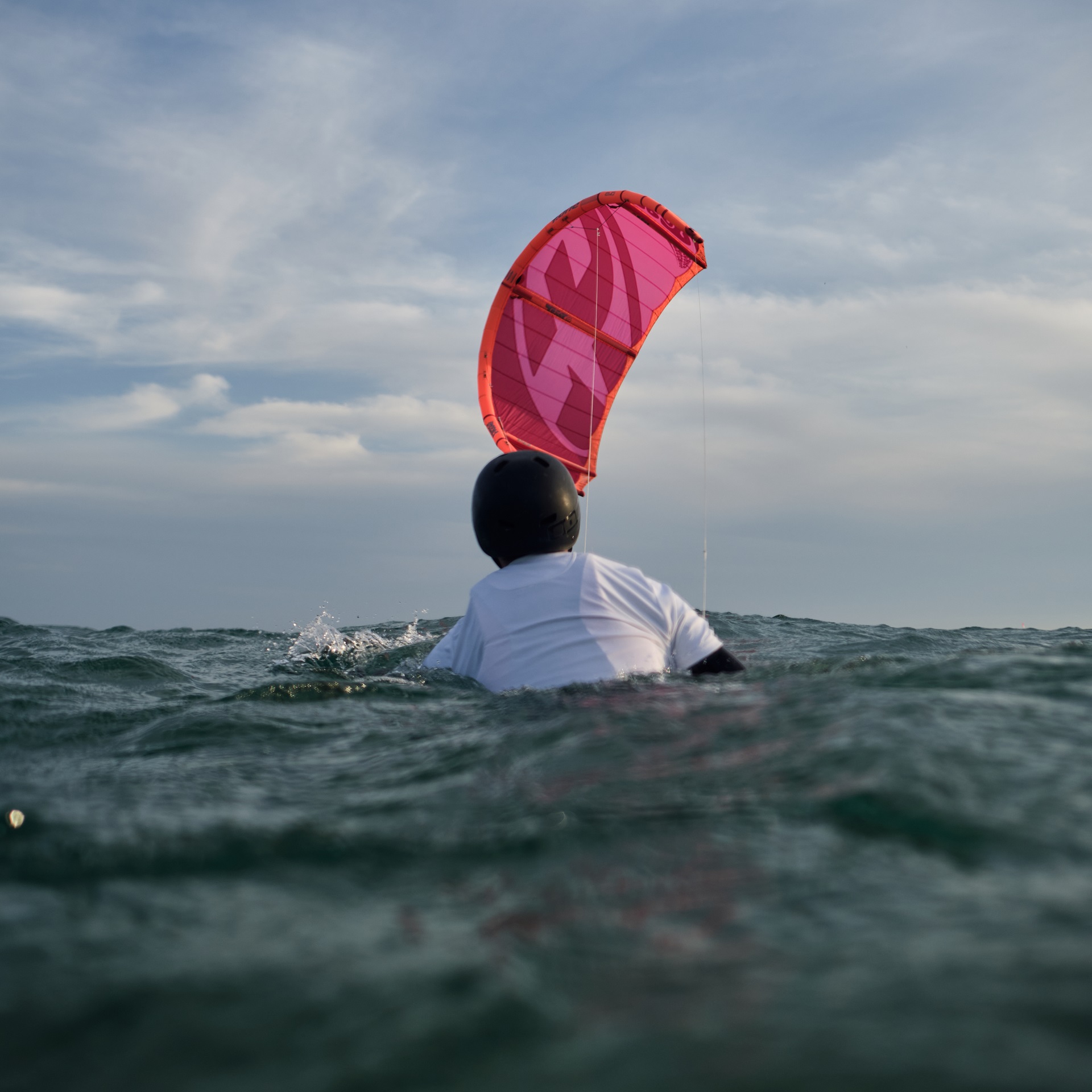
After more than 16 years as a kite instructor, I can tell you one thing with confidence: many riders who struggle in Tarifa have underestimated or skipped body dragging somewhere along the way.
The Parking a Car Comparison
For me, it’s a bit like someone saying: “I have a driver’s license and I can drive a car, but I can’t park.”
As long as you’re driving around an empty parking lot, you might never notice the problem. The moment you enter a busy city, it becomes obvious.
Kitesurfing is very similar. When everything goes perfectly, you may not notice that you’re missing an important skill. But as soon as you lose your board, a small weakness can quickly turn into a stressful session.
Why We Take Body Dragging So Seriously
At High Spirits, we’re quite strict when it comes to body dragging. Not because we want to make things difficult. Not because we want to slow students down. But because we’ve seen over the years how important this skill really is.
If you can’t reliably recover your board, sooner or later you’ll run into problems.
That’s also why we have a simple rule: If someone wants to rent equipment but cannot body drag properly, there is no rental.
It may sound strict, but we’ve seen too many lost boards over the years. And a board can easily cost €600 or more. More importantly, it’s about safety, confidence, and avoiding unnecessary stress on the water.
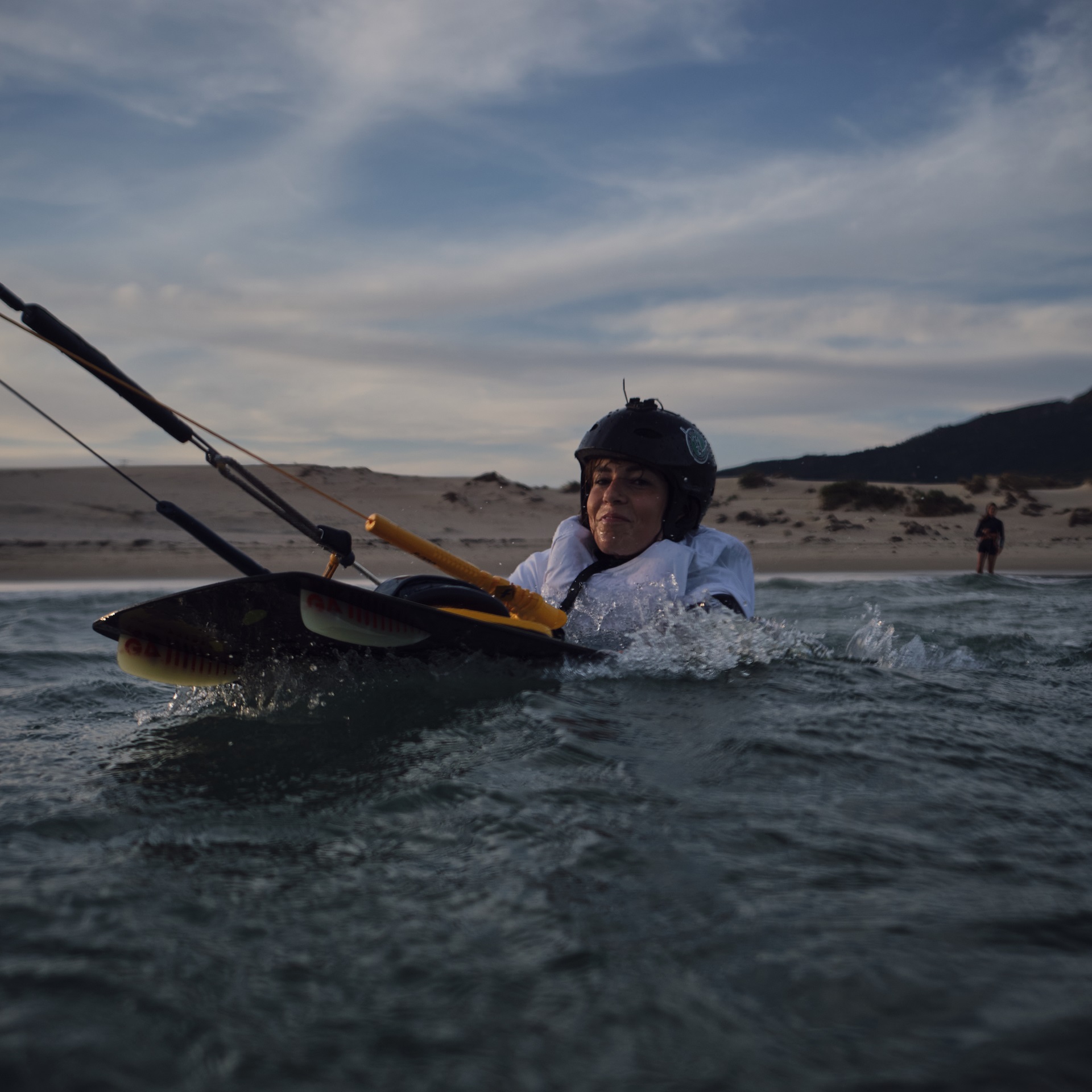
The Real Problem Is Often the Ego
Interestingly, beginners usually don’t have a problem with body dragging. They learn step by step and quickly understand why it’s part of the process.
The challenge often comes from riders who have already taken lessons somewhere else. Maybe they can ride. Maybe they can even stay upwind. And then we say: “Let’s take a look at your body dragging first.”
For some people, that feels like taking a step backwards. But it isn’t. It’s simply a missing piece of the puzzle that needs to be added before moving forward.
A Story We See More Often Than You’d Think
We once had a student who had already spent time riding at several flat-water spots. Whenever she kept her board on her feet, everything was great. She was riding, progressing, and having fun.
But every time she lost the board, the entire lesson changed. The instructor kept explaining the exercises. She just wanted to keep riding. She found body dragging boring.
The result? Frustration for the student, frustration for the instructor, and much slower progress than necessary.
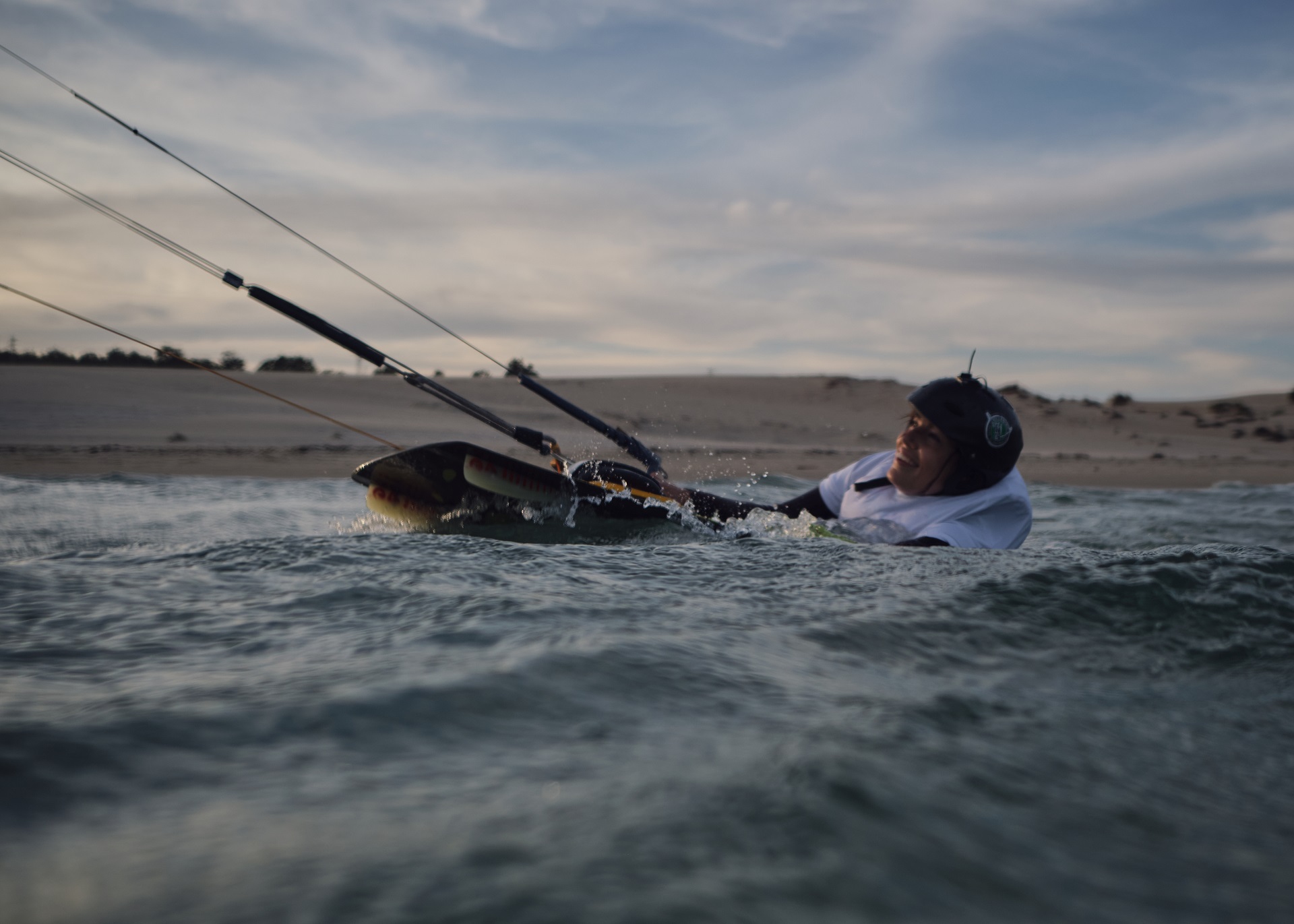
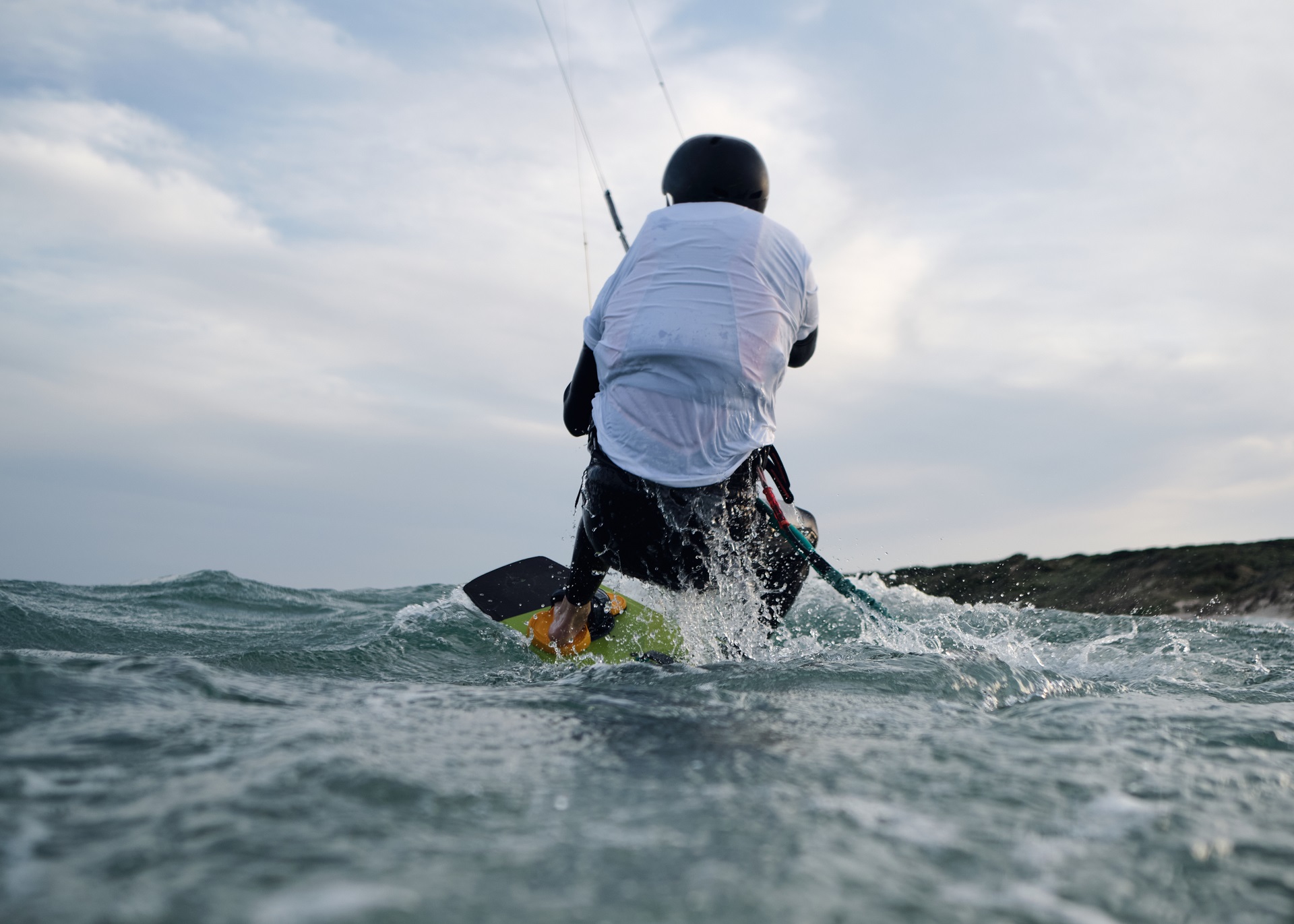
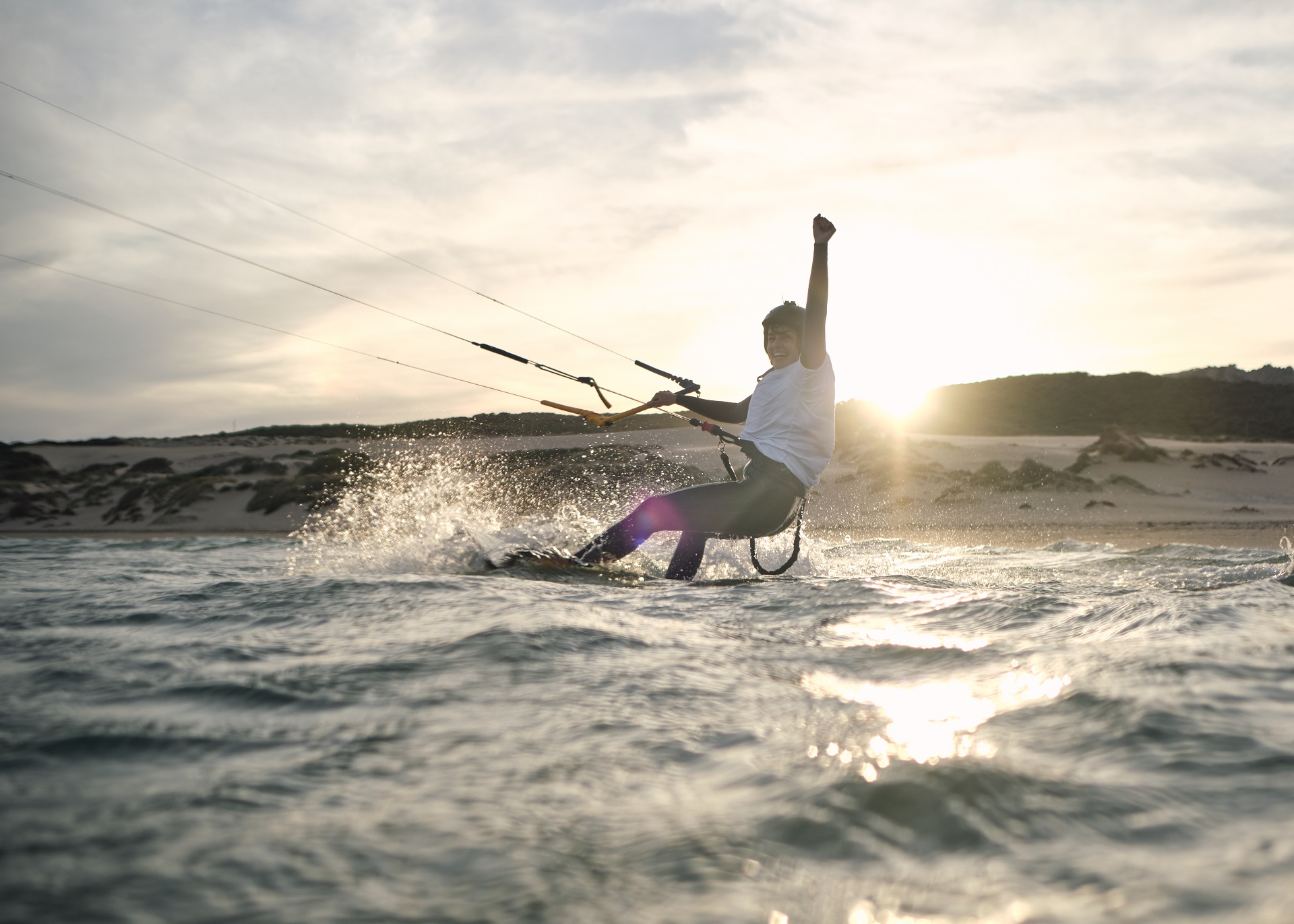
At some point, you simply have to accept that certain steps cannot be skipped. Not in kitesurfing. Not in driving. Not in any sport where solid fundamentals matter.
Why Advanced Riders Need Body Dragging Even More
Many people think body dragging is only for beginners. In reality, the opposite is true.
As soon as you start learning new skills, you will lose your board. Your first jumps, your first transitions, your first rotations, your first sessions on a surfboard, your first attempts at foiling, or your first strapless tricks.
You will crash. You will make mistakes. And you will lose your board. That’s part of the learning process.
If you’re constantly worried about losing your board, you’ll naturally become more cautious. You’ll try fewer new things. You’ll progress more slowly.
That’s why body dragging isn’t just a beginner skill. It’s a skill you’ll use throughout your entire kitesurfing journey.
Three Simple Tips for Better Body Dragging
1. Look Where You Want to Go
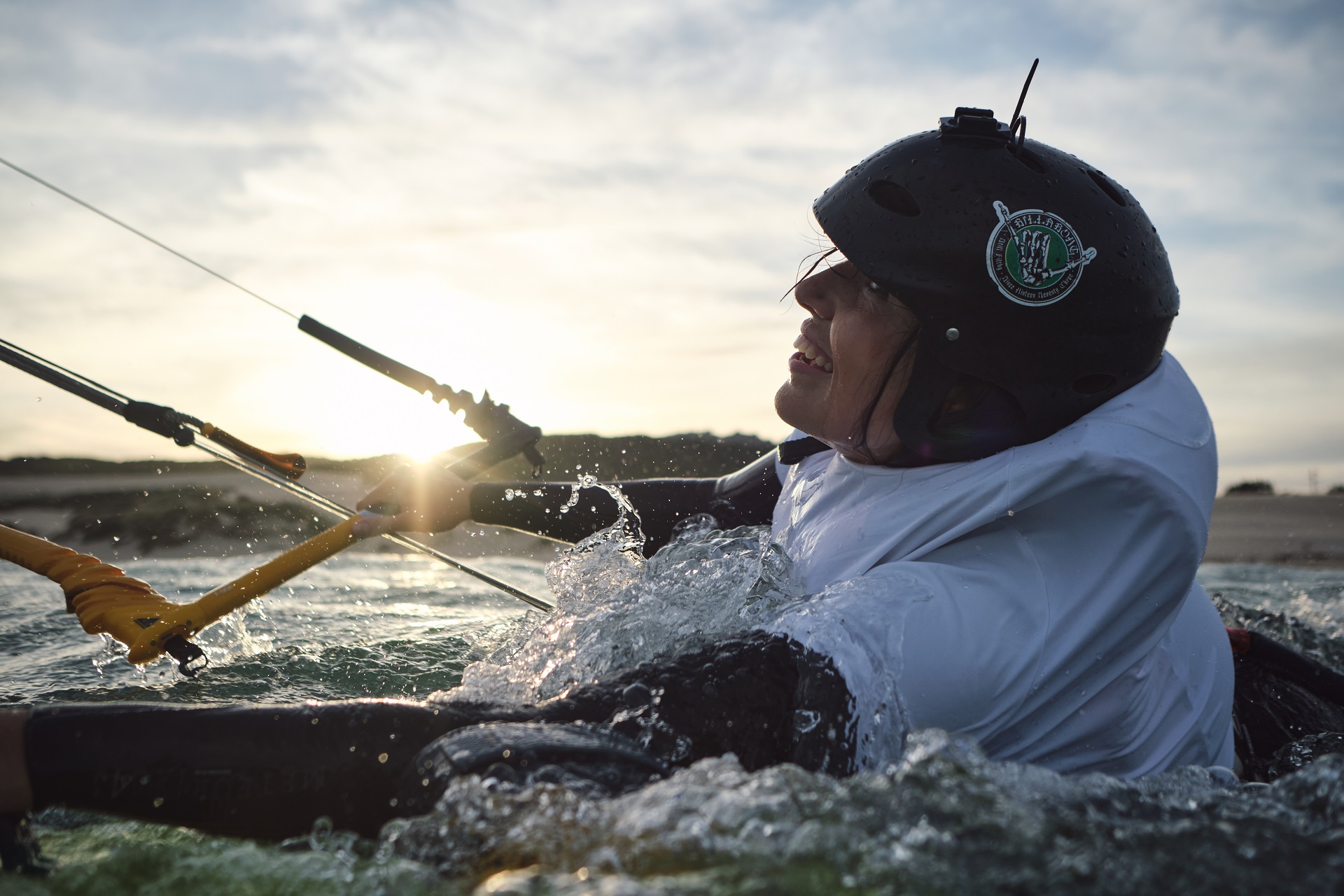
Many riders spend too much time looking at their kite. Instead, focus on where you want to travel. Your body naturally follows your vision, making it much easier to hold a clean line through the water.
2. Keep Your Hand Centered on the Bar
A common mistake is allowing the kite to slowly climb too high. This often happens because the hand position on the bar isn’t correct. When the kite moves higher, it pulls you more downwind, forcing you to correct your course and lose the ground you’ve already gained.
A small adjustment in hand position can make a huge difference.
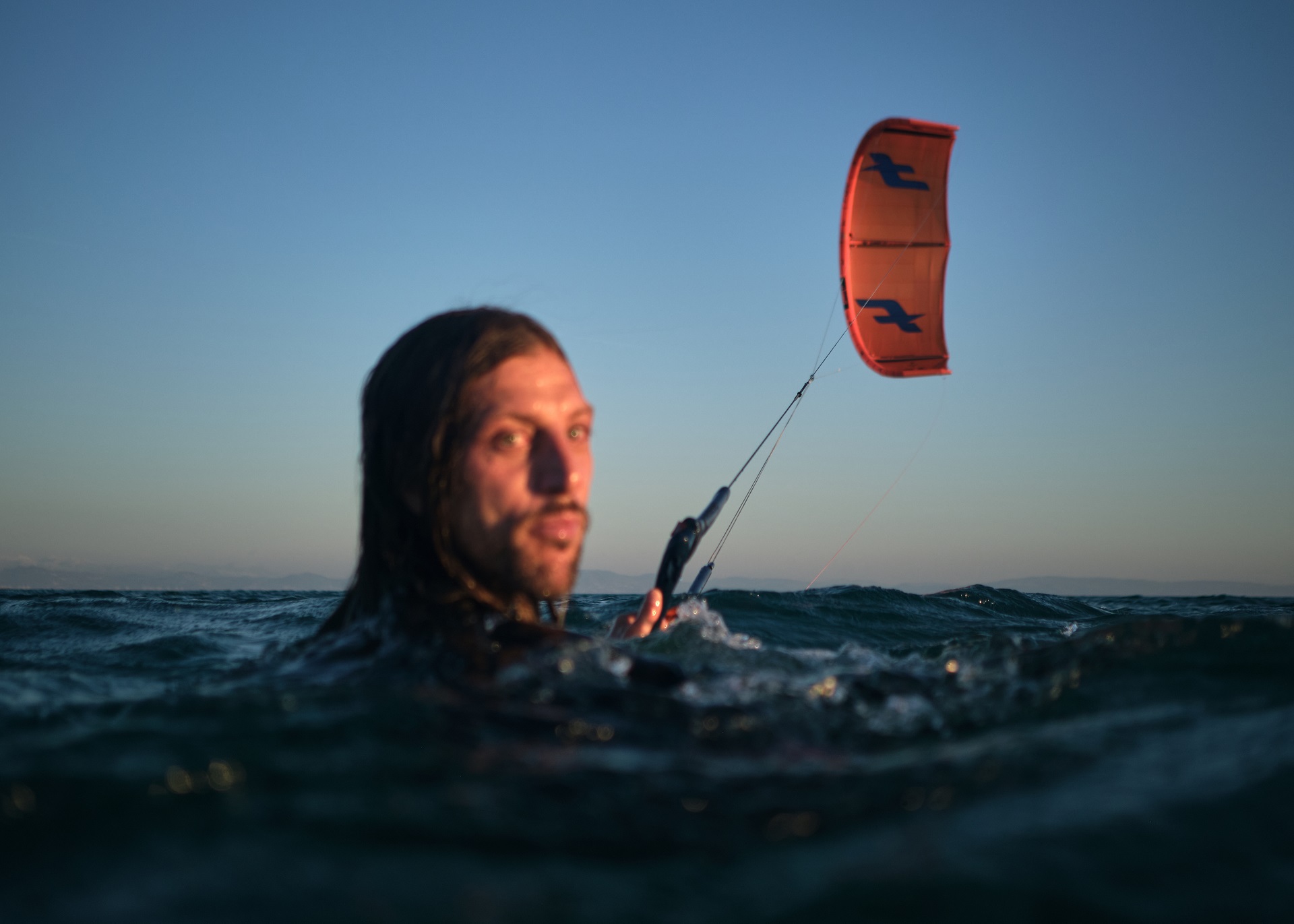
3. Body Position Matters More Than You Think
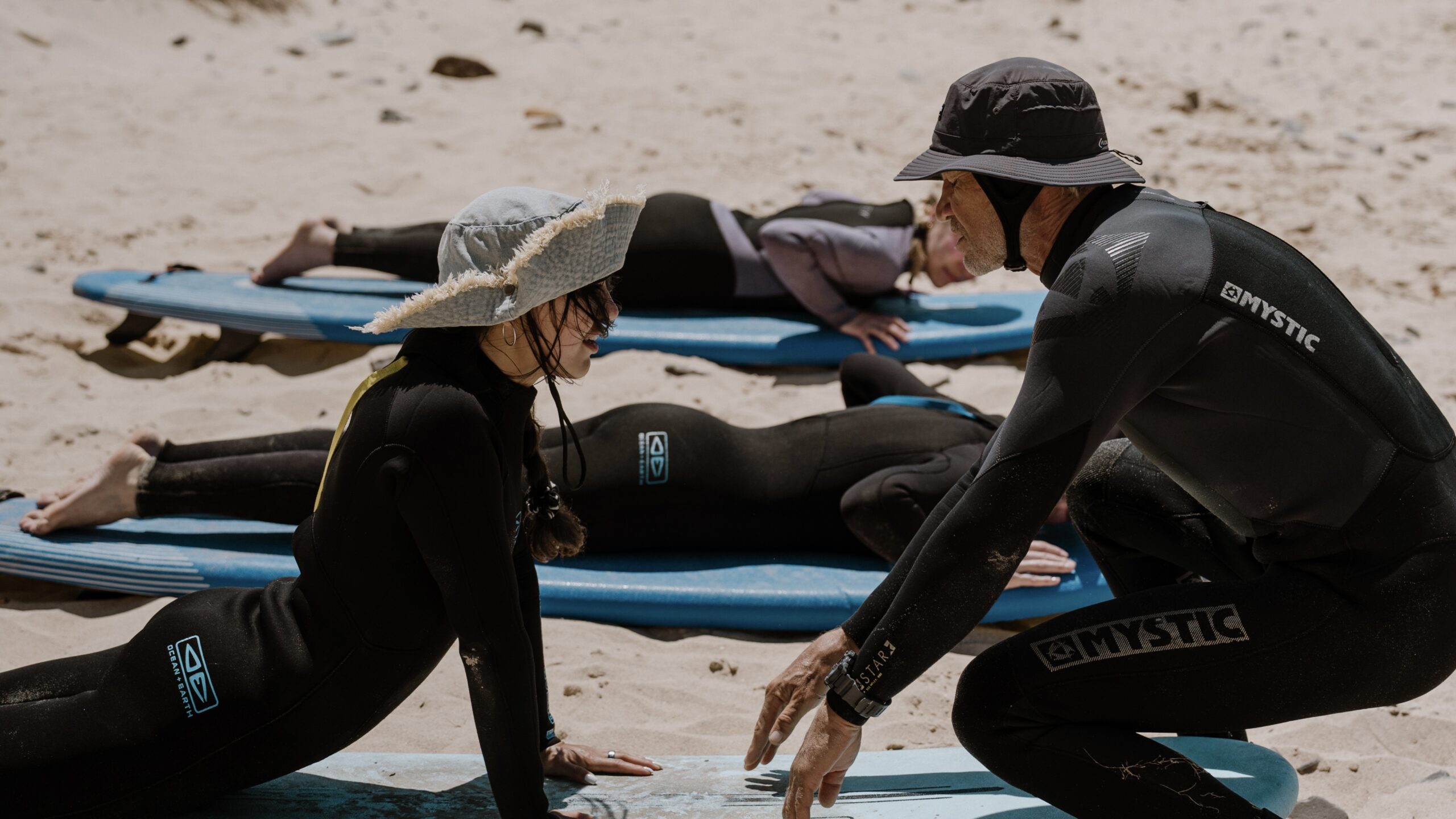
Besides your vision and hand position, body posture is extremely important. We have a small trick that we teach our students on the beach, and it works surprisingly well.
We’ll keep the full explanation for our lessons. Let’s just say that the position of your legs and feet has a much bigger impact on your body dragging than most people realize.
The Good News
Body dragging is not something that takes months to learn. When someone is motivated and understands the technique, the improvement can be surprisingly fast.
Sometimes 30 focused minutes are enough to make a huge difference.
And if someone is really struggling, there’s always the option of having an instructor work with them directly in the water. That’s usually not necessary, but occasionally it helps create that one breakthrough moment that suddenly makes everything click.
Most students understand very quickly afterwards why we put so much emphasis on this skill.
Final Thoughts
Body dragging may not be as exciting as your first water start. It doesn’t look impressive on Instagram.
But it is one of the most important skills in kitesurfing.
If you master it, you’ll lose less equipment, save energy, progress faster, and enjoy new spots with much more confidence.
That’s exactly why we take it so seriously. Not to slow people down, but to help them become safer, more independent, and ultimately enjoy kitesurfing even more.